Outsourcing ADAS Calibration Won’t Make Your Liability Disappear – But the Right Partner Can


It’s a conversation we keep having with workshops: a lot of them would rather send ADAS calibration work elsewhere than take it on themselves. Not because they can’t learn the process — most could, given time and the right rig — but because the complexity feels risky, and the liability question feels riskier still. If a calibration is wrong and something goes sideways down the road, who’s on the hook?
It’s a fair question. It’s just not the one most workshops are actually answering when they avoid the work.
The concern is real. The reasoning behind it isn’t always
ADAS calibration touches systems that keep people safe at speed — forward collision warning, lane-keep assist, automatic emergency braking. Get a sensor recalibration wrong after a windscreen replacement or a bumper repair, and you’re not looking at a comeback job. You’re looking at a vehicle that might not perform the way its OEM repair procedure and position statement say it should. That’s the kind of failure that ends up in a claim file, and eventually, in front of a lawyer.
So workshops are right to take it seriously. Where the logic breaks down is in assuming that pushing the calibration off-site removes them from the liability chain. It doesn’t. A collision repairer is still responsible for returning a vehicle to pre-loss condition, and that includes verifying the ADAS work was done correctly — whoever did it, wherever it happened. Sending the job elsewhere without a solid paper trail just moves the risk somewhere less visible. It doesn’t retire it.
What insurers actually want to see
Here’s the part that gets lost in the anxiety: insurers aren’t primarily worried about where the calibration happens. They’re worried about whether the job followed the OEM repair procedure and whether there’s a calibration report proving it. That report is what turns “we’re pretty sure it’s fine” into a documented, defensible position — the difference between a repairer who can produce evidence and one who’s relying on memory and good intentions if a claim comes back.
This is exactly why avoiding the work in-house only half-solves the problem. Even when it’s done properly somewhere else, the workshop is still the one whose name is on the repair — and still the one who needs the documentation on file if that job is ever questioned. “It was calibrated off-site” isn’t a position statement. A calibration report is.
There’s also the queue nobody’s accounting for
Documentation aside, there’s a more immediate cost to sending ADAS work out: your key-to-key time. Every vehicle that needs to leave the workshop for calibration is a vehicle that’s otherwise ready to go, sitting and waiting instead. Cars bank up while you wait on a booking, a courier, or a return trip — a car that could be out the door today ends up dragging into tomorrow, or the day after.
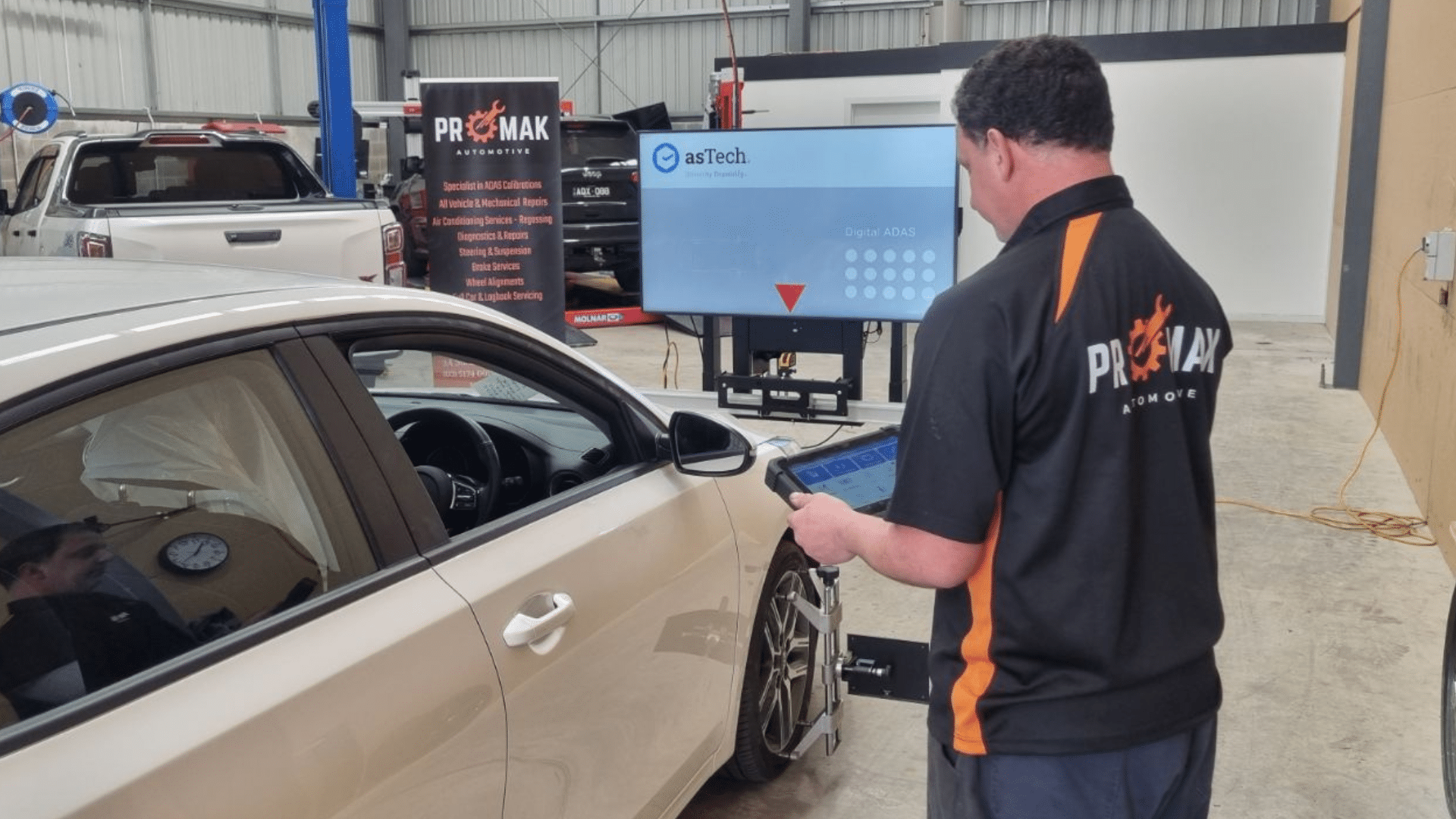
Keeping the work in-house through Remote Services sidesteps that queue entirely. Because the calibration is run remotely through the asTech Link VCI, the vehicle never has to leave your hoist — the job gets done on the spot, and it leaves with the rest of the paperwork already sorted. For a workshop trying to hit cycle-time targets, that’s not a minor convenience. It’s often the difference between a job that turns around in a day and one that drags into the following week.
Where Remote Services changes the equation
This is where Repairify’s Remote Services looks different from the usual approach to ADAS complexity. Our asTech Link VCI connects your workshop directly to a remote, OEM-trained technician who runs the diagnostic and calibration procedure to the manufacturer’s specification — not a generic approximation of it — without the vehicle ever leaving your bay. Every job produces a calibration report that documents exactly what was checked, what was calibrated, and against which OEM repair procedure.
That report is the thing that actually reduces liability exposure. It’s not just proof the work happened; it’s proof it happened correctly, by someone qualified, following the manufacturer’s own process. If an insurer or a solicitor ever comes asking questions eighteen months after a repair, you’re not reconstructing the story from memory — you’re pulling a record.
There’s a secondary benefit workshops don’t always anticipate: because you’re working with a specialist who does nothing but ADAS diagnostics, the calibration itself tends to be more consistent than a one-off, occasional job would be. You get OEM diagnostics performed properly, with the sensor alignment and recalibration documented in a way that stands up to scrutiny — and the vehicle never has to leave your control to get there.
The real choice isn’t do-it-alone-or-avoid-it
The workshops getting this right aren’t the ones deciding between tackling ADAS work solo or steering clear of it. They’re the ones asking a sharper question: how do I keep this job — and the revenue and turnaround that comes with it — while still walking away with a defensible record? Complexity is a reason to bring in a specialist. It’s not a reason to send the car, and the job, out the door.
If your workshop has been sitting on the fence about collision repair work that touches ADAS-equipped vehicles, the fix usually isn’t more hesitation or a longer trip off-site — it’s a remote services partner that lets you keep the work in-house, with a calibration report that actually delivers the liability protection you were hoping avoidance would give you.
Want to see how Remote Services fits into your current workflow? Get in touch at hi@repairify.com.au or 1300 489 252, or check the OEM coverage list to see what’s supported for your vehicle mix.
This article is general information, not legal or insurance advice — individual policy terms and OEM requirements vary, and workshops should confirm specifics with their own insurer.
Stay in the know!
Stay up-to-date with all our latest company news, relevant articles, and get tips to keep your business running smoothly right here.
"*" indicates required fields